
Guides - 06
Dangerous goods: classes and documents
Many ordinary products are dangerous goods in transport: paints, perfumes, batteries, aerosols, some chemicals. They can travel, but only when classified, packed, marked and declared correctly.
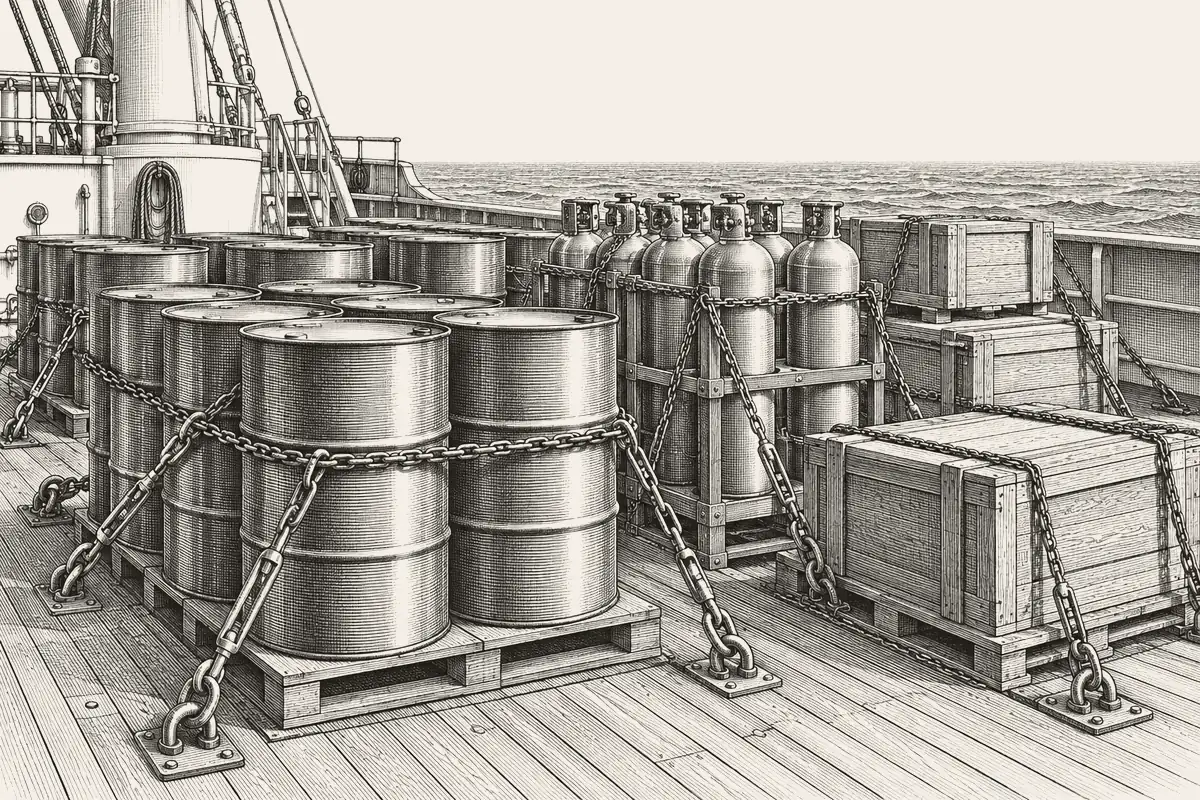
The nine classes
| Class 1 | Explosives |
|---|---|
| Class 2 | Gases |
| Class 3 | Flammable liquids |
| Class 4 | Flammable solids and substances that react dangerously |
| Class 5 | Oxidising substances and organic peroxides |
| Class 6 | Toxic and infectious substances |
| Class 7 | Radioactive material |
| Class 8 | Corrosives |
| Class 9 | Miscellaneous dangerous goods, including lithium batteries |
What a shipment needs
- Safety data sheet (SDS) - from the manufacturer. It shows the classification.
- UN number and proper shipping name - the four-digit number that identifies the substance.
- Packing group - I, II or III, for high, medium or low danger, where the class uses them.
- Approved packaging, marks and labels - as the rules set out for the substance.
- Dangerous goods declaration - signed by the shipper, travelling with the shipment.
Sea and air are different
By sea, dangerous goods travel under the IMDG Code. By air, they travel under the IATA Dangerous Goods Regulations, which are stricter: some goods that can go by sea cannot fly at all, and quantity limits are lower. Carriers, vessels and airlines can also set their own restrictions above the rules.
Where we come in
We check whether your goods can travel by the planned route and mode, book with carriers that accept the class, and coordinate packing, marking and the declaration with licensed dangerous goods handlers. Send us the safety data sheet first.
Services that use this
- Dangerous goodsThrough licensed handlers and carriers that accept them.
- General air cargoScheduled air freight for most goods.
- Full container load (FCL)A container for your cargo alone.
- Marine cargo insuranceCover arranged with insurers.
Send us the details.
Tell us the cargo, the route and the dates. We will reply by email with what we can arrange.